
Sniffspot - Private Dog Parks
Sniffspot Inc.Lifestyle
4.6600.00 Reviews
- Version
- 2.21.1
- Installs
- 100.00K
- Age Rating
- Everyone
Screenshots
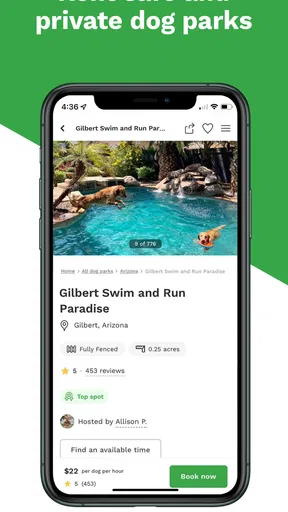
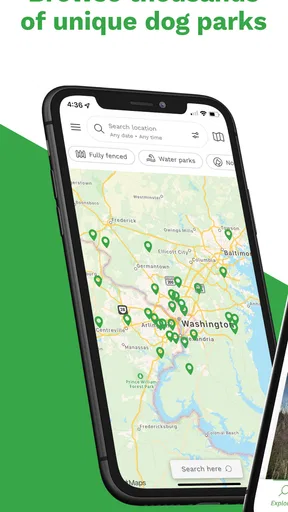
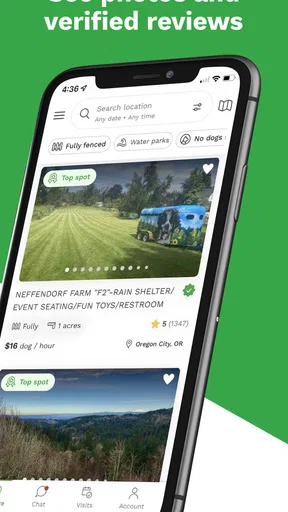
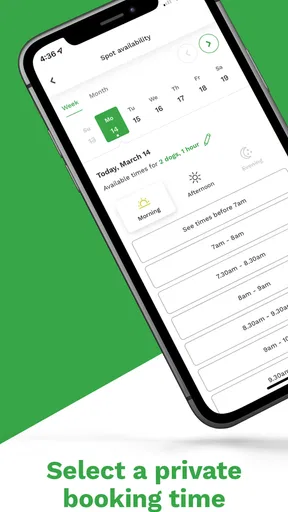

Our Review of Sniffspot - Private Dog Parks
 Analysis by Appyee
I noticed the appeal of Sniffspot - Private Dog Parks almost immediately: it changes the question from “Which public dog park should I try?” to “Can I find a private place that suits my dog today?” That difference matters when a dog is nervous around strangers, needs room to run, or simply does better without a crowded, unpredictable park. Sniffspot is a free lifestyle app from Sniffspot Inc. built around finding private spaces for dogs to exercise, explore, train, swim, or play.
My first impression was that the app is most useful when I treat it as a planning tool rather than a replacement for every walk. A normal neighborhood walk is convenient and familiar, while a private dog-park rental is more intentional. I would open the app when my dog needed a change of scenery, when I wanted a controlled training session, or when a busy public park sounded like a bad idea. That makes the service feel more personal than a standard list of nearby parks.
Does Sniffspot stay useful after the first visit?
I find the lasting usefulness comes from noticing which kinds of outings genuinely suit my dog, then choosing a private space for that purpose rather than browsing just for novelty. I’d also weigh the planning and travel against the calmer, more controlled visit I’m hoping for; that balance is what tells me whether it belongs in my regular routine or is better kept for occasional needs.
The first-week appeal is easy to understand
During the first week, the biggest attraction is the possibility of matching the space to the dog instead of forcing the dog to adapt to a public park. A dog that becomes overwhelmed by unfamiliar animals may benefit from private time. A young dog learning recall may need a more manageable setting. A senior dog might prefer a quiet area where exercise can happen at its own pace. The app’s focus on private dog spaces gives those situations a clear place to start.
I also like the range of activities implied by the service. This is not limited to throwing a ball for ten minutes. A visit can be used for sniffing, basic obedience, structured play, hiking, swimming, or simply letting a dog investigate a new environment. That flexibility is important because dogs do not all need the same kind of outing. Physical exercise may be the priority one day, while confidence-building or calm exploration may matter more the next.
The first useful habit is to decide what I want from a visit before searching. If the goal is recall practice, I would look for a space where I can focus without constant interruptions. If the goal is decompression, I would avoid turning the outing into a packed training schedule. If the dog needs to burn energy, I would think about the available room and terrain rather than choosing only by distance. This simple preparation makes the app more valuable than casually browsing places.
For households with more than one dog, private access can also solve a practical problem: different dogs may have different comfort levels. Instead of separating an outing between a public park and a short walk, a private space may allow everyone to participate in one planned visit. I would still consider each dog’s behavior and stamina, but the setting gives the owner more control than a shared public area.
What I would check before booking a visit
The app can help with discovery, but the quality of the experience depends heavily on reading each listing carefully. I would pay attention to the description, photos, location details, and any information about the space before committing to a visit. A place that looks ideal for a high-energy dog may be less suitable for a cautious dog, while a quiet-looking space may not offer enough room for a dog that needs sustained running.
I would also plan the arrival rather than treating the visit like an ordinary stop at a public park. A dog may be excited by a new location, so a leash, water, waste bags, and a few familiar training rewards are sensible basics. If swimming is part of the plan, I would make sure the dog is comfortable around water instead of assuming that every dog will enjoy it. The private setting improves control, but it does not remove the need for supervision.
One non-obvious advantage is that a private visit can be used as a controlled experiment. I can change one variable at a time: a quieter environment, a different surface, a longer sniffing period, or a short training routine. That makes it easier to notice what actually helps my dog settle. Public parks introduce too many distractions to draw useful conclusions, especially when I am trying to understand whether a dog is reacting to other animals, noise, fencing, or unfamiliar surroundings.
Month-to-month value comes from solving recurring problems
After the novelty fades, the app earns a place on my phone only if it solves a problem repeatedly. For me, the strongest recurring use would be replacing occasional stressful outings with planned private sessions. A dog that does poorly in crowded parks may need this kind of option every few weeks, not just once as a special treat. Likewise, an owner working on recall or confidence may find a private space more useful when visits form part of a steady routine.
A realistic everyday scenario would be a rainy or hectic week in which a normal walk is not enough, but a public dog park is too busy. I could use the app to find a private setting, schedule a focused visit, and give the dog time to move and sniff without managing constant encounters. The value is not that the app makes dog care effortless; it is that it helps turn an awkward day into a more deliberate plan.
It may also be useful for transitional stages. A newly adopted dog, for example, may need time to become comfortable outside the home. A private space can offer a middle step between the backyard and a crowded public park. I would not assume that one visit solves socialization or anxiety, but the calmer environment may make gradual progress easier to observe. The same applies to dogs recovering from a period of inactivity, provided the owner follows appropriate professional advice.
Compared with a public dog park, the main trade-off is control versus spontaneity. Public parks are often free, familiar, and easy to visit without much planning. Sniffspot is more appealing when predictability matters more than convenience. Compared with a regular walk, it offers more room and a different sensory experience, but it requires a deliberate trip. Compared with a dog daycare or group activity, it can provide a quieter, more individualized outing, while offering less built-in supervision and social structure.
The app’s average rating of 4.6 from around 4.6 thousand ratings, along with more than 100 thousand installs, suggests that the concept has found a real audience. I would not treat those figures as proof that every location will suit every dog, because the experience depends on the individual space and the dog’s needs. Still, they indicate that this is more than a novelty idea that only works for a narrow group of owners.
Maintenance is mostly about planning, not constant app work
The maintenance burden is moderate. I do not expect to open the app every day unless private exercise is part of my regular routine. The ongoing work is choosing suitable places, remembering what worked, and deciding whether a repeat visit is worth the effort. A short note after each outing can help: how settled the dog was, whether the space offered enough exercise, and whether the travel time felt reasonable.
That personal record becomes surprisingly useful over time. A dog may enjoy one location for sniffing but become distracted there during training. Another may be better for running, while a third works well for a calm first visit with a nervous dog. Instead of judging every space by a single overall impression, I can build a small rotation based on purpose. This is one of the clearest ways to turn the app from a novelty into a repeatable routine.
I would also avoid booking a private park simply because it is the closest result. Travel time affects whether the habit survives a busy month. A slightly farther space may be worth it for a special training session, but a regular outing needs to fit realistically into the week. The app can help me find options, yet it cannot decide whether the trip fits my schedule, budget, weather tolerance, or dog’s energy level.
Another practical consideration is preparation between visits. If the dog is using the outing for recall, I need a clear training plan. If the dog is swimming, I need to think about drying and the journey home. If the visit involves hiking, I need to consider the dog’s stamina and the owner’s ability to manage the route. These details are not glamorous, but they determine whether the service feels genuinely helpful or like another task to organize.
The sources of fatigue become clearer with regular use
The first source of fatigue is repetition in the search process. Browsing for a suitable place can be enjoyable at the beginning, but it may feel like work if I have to compare options for every outing. The solution is to identify a few reliable choices and reserve exploration for occasional variety. If I constantly chase the “perfect” location, I may spend more time planning than exercising the dog.
A second source is the difference between a promising listing and a perfect real-world match. Photos and descriptions can help set expectations, but a dog responds to details that an owner may not notice immediately: smells, surfaces, sounds, slopes, gates, or nearby activity. I would approach the first visit as an evaluation rather than assuming it will become a favorite. That mindset makes an imperfect match less disappointing.
There is also a behavioral fatigue that private spaces do not automatically eliminate. Some dogs become more excited, not calmer, when they enter a new environment. A large area can encourage frantic running instead of useful exercise. For those dogs, I would begin with a short visit, include pauses, and reward calm behavior. A private park gives me room to manage the session, but the owner still has to manage the dog.
Owners who mainly want spontaneous daily exercise may find the service less convenient than a nearby public park. It is also not the right answer for someone seeking guaranteed group play, professional training, or a caretaker who takes over supervision. A private rental gives control to the owner; that is its strength and its responsibility. If I want someone else to handle the dog’s exercise, I would look at a different kind of service.
People with very limited mobility or transportation may also struggle to get lasting value from it. The app can make suitable spaces easier to discover, but it cannot change the practical difficulty of reaching them. Likewise, a dog that is content with ordinary walks and has easy access to a safe yard may not need private rentals often enough to justify adding another planning step.
Version, accessibility, and who should try it
The current version is 2.21.1, and the app supports devices running Android 7.0 or later. It is free to install and carries an Everyone age rating, which makes it straightforward for households to explore together. The developer is Sniffspot Inc., and the app sits naturally in the lifestyle category rather than behaving like a training course, social network, or general map utility.
That distinction matters when setting expectations. I see it as a way to locate and organize access to private dog spaces, not as a complete dog-care system. It will be most useful to owners who can describe their dog’s needs clearly and are willing to evaluate each location carefully. First-time dog owners may appreciate the options, but they should not confuse a private setting with automatic safety or expert guidance.
I would recommend trying it if your dog dislikes crowded parks, you need a controlled place for training, your home does not provide enough room, or ordinary walks have become repetitive. It is especially appealing when you want the dog to explore without the social pressure of an open public park. I would skip it if your main priority is a free, instant, no-planning outing or if your dog already gets everything needed from nearby walks and a secure home space.
My long-term verdict
In my experience, the lasting value is not the excitement of discovering a new dog park. It is the ability to build a small, purposeful collection of places for different situations. One space may support recall work, another may offer a better change of scenery, and another may suit a dog that needs a quieter outing. That kind of rotation can make the service feel useful months after the first search.
The important trade-off is that Sniffspot does not remove effort; it redirects it. Instead of dealing with crowds at a public park, I spend time choosing a location and preparing the visit. For the right dog and owner, that is a very good exchange. For someone who values maximum convenience above control, it may feel like unnecessary planning.
I would keep Sniffspot - Private Dog Parks installed if my dog regularly benefited from private exercise, focused training, or calmer exploration. I would not use it as the only form of activity, because ordinary walks, home routines, and appropriate social experiences still have their place. Used selectively, it gives me a practical way to respond to days when the standard dog-park routine does not fit.
My final recommendation is cautious but positive: try it with one clearly defined goal, judge the first visit by your dog’s behavior rather than the novelty of the location, and keep only the spaces that genuinely improve your routine. The app earns lasting space when it makes difficult outings easier to manage, not merely when it offers somewhere new to go.
Verdict
Strengths of Sniffspot - Private Dog Parks
- Private spaces offer dogs safer, calmer off-leash exercise.
- Search filters help find parks suited to size, location, and needs.
- Many listings include useful amenities such as water, fencing, or shade.
- Booking by the hour provides flexible alternatives to public dog parks.
- Reviews and photos make it easier to assess a host’s property beforehand.
Limitations of Sniffspot - Private Dog Parks
- Availability can be limited in busy areas or during popular time slots.
- Prices vary by host and may become expensive for frequent visits.
- Property quality and fencing standards differ between individual listings.
- Some locations may require driving outside your immediate neighborhood.
- Cancellation rules and additional host fees can differ from one booking to another.
Similar Picks in This Category
View All
SmartThings
Samsung Electronics Co., Ltd.4.6

Google Home
Google LLC4.0

Pinterest4.2

Astrotalk - Talk to Astrologer
Astrology & Horoscope4.7

My Verizon
Verizon Consumer Group4.5

Samsung Wallet (Samsung Pay)
Samsung Electronics Co., Ltd.4.1
Frequently Asked Questions
What is Sniffspot - Private Dog Parks?
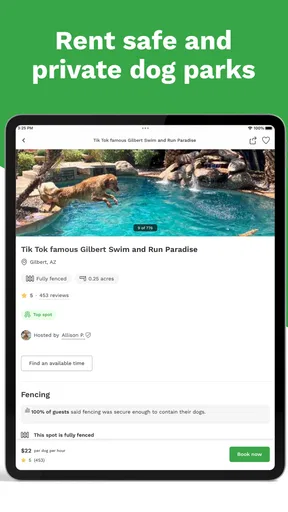
Sniffspot is a service that lets dog owners discover and reserve private outdoor spaces where their pets can play, exercise, and explore without sharing the area with unfamiliar dogs. Available spots may include fenced yards, farms, trails, or larger open properties. Each listing normally provides photos, rules, amenities, pricing, and availability so you can choose a location that matches your dog’s needs.
How does booking a private dog park through Sniffspot work?
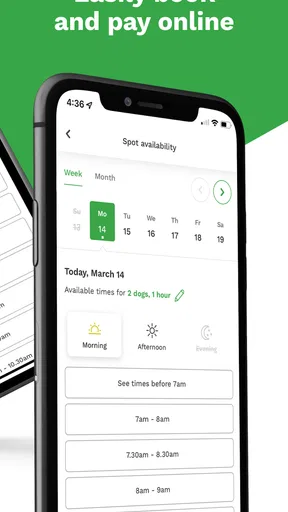
After creating an account, you can search for nearby Sniffspot locations by entering a city, address, or preferred area. Filters may help you find features such as fencing, water, parking, or space for multiple dogs. Once you select a host’s property, choose an available date and time, review the rules, and complete the reservation through the app. Access instructions are generally provided after booking.
Is Sniffspot suitable for reactive, nervous, or unsocialized dogs?
One of Sniffspot’s main advantages is that many locations are booked privately, allowing your dog to play without direct contact with unknown animals. This can be helpful for reactive, fearful, elderly, or recovering dogs that may become stressed in crowded public parks. However, every property has different surroundings, fencing, noise levels, and nearby activity, so read the listing carefully and select a space appropriate for your dog.
How much does Sniffspot cost, and are there additional fees?
Prices are set by individual hosts and can vary according to location, property size, amenities, demand, and booking duration. Some spaces charge by the hour, while others may offer different rates or packages. Before confirming a reservation, review the complete checkout total, including any applicable service charges, taxes, or other fees. Cancellation and refund conditions may also differ, so check the booking policy in advance.
What should I know about safety, rules, and cancellations before using Sniffspot?
Before visiting, carefully read the host’s instructions regarding gates, leashes, waste disposal, parking, permitted activities, and the number of dogs allowed. Inspect the property when you arrive and keep your dog supervised throughout the visit, even if the area is advertised as fenced. Hosts may have individual cancellation policies, and weather or access issues can affect a reservation, so review the listing terms and contact support or the host when a problem occurs.
